History & Civilization
Oracle Bone Script: The Earliest Large-Scale Surviving Royal Written Records in China
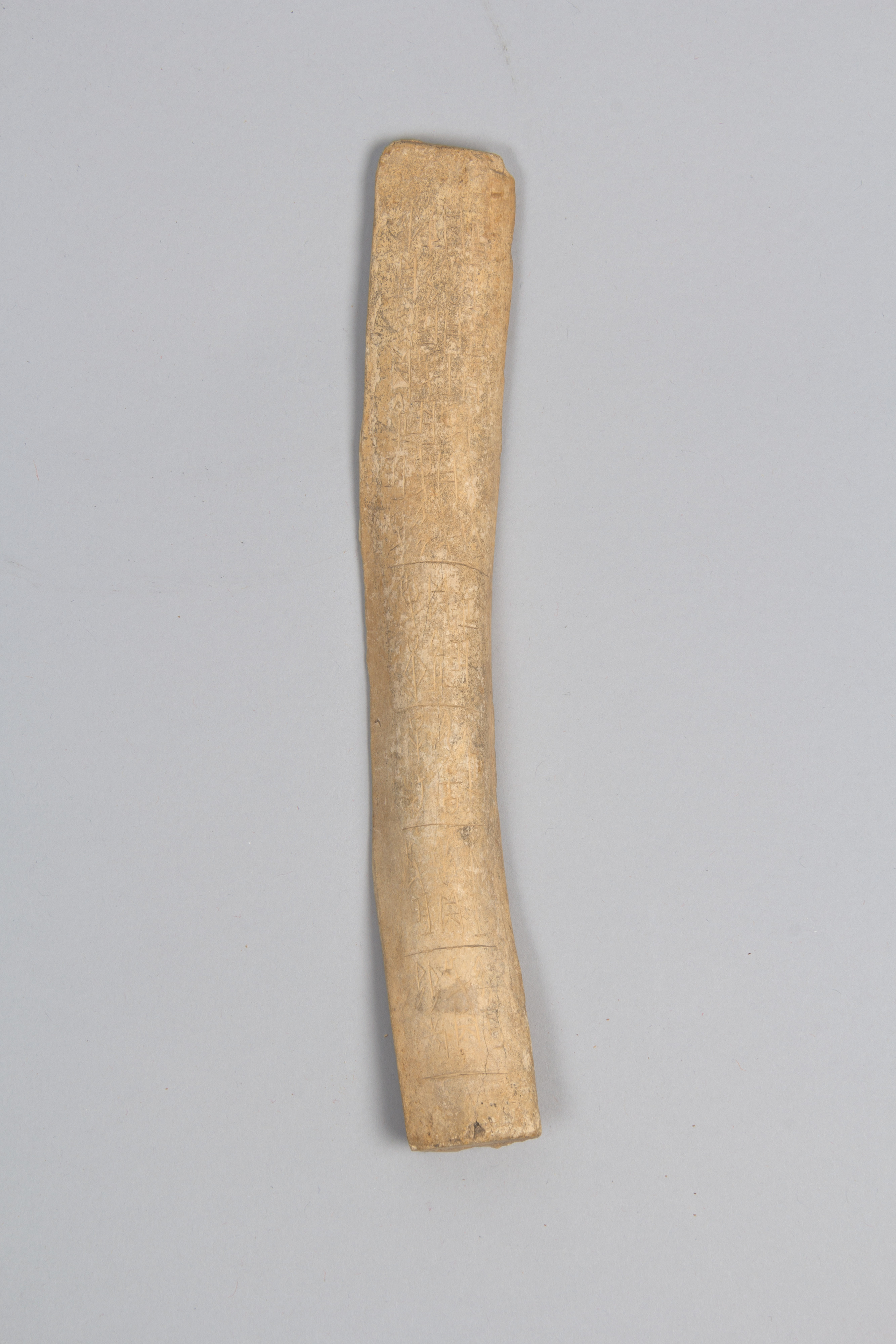
Oracle bone script is the earliest known mature writing system in China. However, it did not appear suddenly.
At several Neolithic sites in China, archaeologists have found different kinds of carved marks and symbols. Some of them appear repeatedly and have relatively fixed forms. Scholars still disagree about whether these signs should be considered true writing. Even so, the evidence suggests that Chinese writing had already gone through a long period of development before it became fully mature in the Late Shang period. This development was connected not only with earlier symbolic traditions, but also with the growth of more complex social organization and increasingly concentrated political power.
The Late Shang period marks a much clearer turning point.
Recent radiocarbon studies place the reign of King Wu Ding roughly between the mid-thirteenth and late twelfth centuries BCE. A very large number of Late Shang oracle bones have now been discovered. The inscriptions on them form the earliest known large body of mature Chinese writing. The royal divination records excavated at Yinxu in Anyang, Henan, are especially important. For the first time, they allow us to use a large amount of writing produced at the time itself to study the politics, religion, and court life of an early Chinese dynasty.
It is important to note that divination with animal bones did not begin in the Late Shang. Rowan Flad’s comparative study of divination bones from Neolithic China through the Shang and Zhou periods shows that this practice had existed much earlier. What changed in the Late Shang was not the simple use of bones for divination. The practice became more regular, professional, and standardized, and it became more closely connected with royal politics and state power.
The Late Shang oracle bones therefore reflect more than a religious practice. They show a system that had become part of the operation of royal power.
Royal Activities Began to Be Recorded Systematically
One of the most important features of oracle bone writing is that it allows us to read large numbers of royal records produced during the time of an early dynasty.
Many inscriptions contain clear information about time, people, and events. Some even include later notes recording what happened after the original divination. In this sense, certain inscriptions may look a little like diary entries. However, they were neither private diaries nor historical books in the later sense. They were mainly working records created through royal divination and court activities.
Different participants can be identified within this system.
The Shang king stood at the center of royal political and religious life. He took part in important matters such as sacrifices, warfare, hunting, illness, and childbirth within the royal family. In many inscriptions, he also interpreted the cracks produced during divination. The diviners, often called zhenren, carried out the actual divination. The names of many of them have been preserved in the inscriptions. There were also people responsible for writing and carving the texts, recording the date, the people involved, the subject of the divination, the king’s judgment, and sometimes the final result of the event.
This shows that oracle bone writing was no longer occasional personal writing. It had become part of the regular activities of the royal court.
The subjects recorded on oracle bones were very broad. The surviving material can be used to study royal authority, territory, sacrifice, kinship, warfare, alliances, exchange, and life within the Shang court. Their historical value lies in the fact that they were not stories written down by later generations. They were records created by the Shang court while these events were actually taking place.
Oracle bones, therefore, should not be seen simply as isolated examples of ancient writing. They are records produced within real political, religious, and social activities.
Were Oracle Bones the Earliest Form of “History”?
Strictly speaking, oracle bone inscriptions cannot be called historical writing in the same sense as Sima Qian’s Records of the Grand Historian.
They were not written as a history of the dynasty for future generations, and they did not have the full narrative structure of later historical works. However, they did turn many royal activities into written records at the time those events were taking place.
A relatively complete divination inscription might contain several parts: the date of the divination, the name of the diviner, the matter being considered, the king’s interpretation of the signs, and, in some cases, a later note describing what actually happened.
Because of this, some oracle bone inscriptions can show the development of an event over time.
A famous example concerns the childbirth of Fu Hao.
Heji 14002 contains a record related to one of Fu Hao’s pregnancies. On a jiashen day, a diviner performed a divination concerning her childbirth. The king examined the signs and gave his judgment. Thirty-one days later, another note was added, recording that Fu Hao gave birth on a jiayin day and stating the outcome.
If we set aside the question of whether the divination itself was correct, the structure of the record is very clear:
The event had not yet happened, and a divination was performed.
The king interpreted the signs.
Some time later, the event took place.
The actual result was then added to the original record.
The importance of this kind of material is that it does not simply record a name or an isolated event. It places expectation, judgment, and later result within one process of written recording.
Fu Hao is also one of the most important royal figures found in inscriptions from the reign of Wu Ding. Oracle bone records concerning her can be compared with archaeological finds from the Tomb of Fu Hao at Yinxu. In this case, written evidence and archaeological evidence can be studied together. This is an important feature of research on Late Shang history.
What Did the Shang Kings Record?
It is sometimes assumed that Shang oracle bones were mainly concerned with astrology, farming, or sacrifice. The surviving inscriptions show that this view is too limited.
The Shang royal court was concerned with a wide range of matters, including ancestor worship, warfare, military campaigns, agriculture, harvests, rainfall, illness, hunting, the safety of royal family members, and childbirth. In other words, the oracle bones preserve a broad picture of the world faced by the Late Shang court.
Sacrifice and ancestor worship make up a large part of the surviving material, which reflects the close relationship between religion and politics in Shang society. But oracle bone inscriptions were not limited to religious matters. Questions about military action, harvests, rain, illness, and the timing of important activities could all become subjects of divination and written record.
In modern popular writing, these topics are often summarized as questions such as:
“Will it rain?”
“Will this year’s harvest be good?”
“Will this military campaign succeed?”
“Which ancestor should receive sacrifice?”
These examples are useful for modern readers, but they need to be treated carefully. From the point of view of grammar and paleography, oracle bone “charges” were not always written as direct questions in the modern sense. Many were closer to statements about possible events. So modern question forms should be understood as summaries of the issues being considered, not as exact translations of the original wording.
Whatever their exact grammatical form, these inscriptions show one basic fact: important matters faced by the royal court were being turned into written records in a systematic way.
Dates, names, sacrifices, warfare, illness, childbirth, and the king’s judgments could all be recorded. In some cases, even the later result of an event was added.
This is one of the major reasons why oracle bone writing is so important in the history of Chinese civilization.
Writing Became Part of Royal Power
The maturity of writing should not be measured only by the number of characters or by the ability to write more complex texts.
More importantly, writing began to be used continuously by a political organization.
Late Shang oracle bones show that divination was an old religious practice, but when it became more professional and standardized, and when dates, people, royal activities, and the king’s judgments were recorded together, writing itself became part of the operation of royal power.
In this sense, one major change in the Late Shang was that the state had begun to develop the ability to turn its own activities into written records that could be preserved.
This process is closely related to one of the main issues discussed by Flad. As divination practices became more complex, they became increasingly connected with larger social organizations, specialized roles, and political power. Oracle bone writing gained new functions within this institutional setting.
This does not mean, however, that the Late Shang oracle bone system directly developed into the official historical institutions of later China.
A very long period separates the Shang from the imperial age. The purpose of record keeping, the institutions involved, the people responsible, and the political culture all changed greatly. There is not enough evidence to prove that later official historiography was directly inherited from the Shang oracle bone system.
Yet if we ask a broader question—how state activities came to be preserved in writing—the Late Shang oracle bones remain extremely important.
The surviving evidence shows that by the Late Shang period, major royal activities could already be recorded in large numbers and in relatively stable forms.
From Royal Records to Later Official Historiography
In later periods, Chinese dynasties gradually developed more complete systems for official record keeping and historical writing.
By the imperial age, recording the words and actions of emperors, government affairs, appointments, punishments, rewards, and institutional changes had become an official responsibility. Court diaries, daily records, veritable records, and dynastic histories developed under different institutions and editorial procedures.
These later systems were very different from Shang oracle bones in both purpose and organization. They should not be treated as a simple continuation of the same institution.
However, when the two are viewed across the long history of Chinese civilization, an important pattern can still be seen: the state’s ability to preserve its own activities through writing became increasingly developed as political organization and writing systems grew more complex.
More than three thousand years ago, the divinations, sacrifices, wars, and royal events of Shang kings were carved onto turtle shells and animal bones. Much later, emperors were surrounded by officials whose duty was to record court affairs, and the activities of an entire reign could be organized into official records and historical works.
There is no reason to assume a simple line of direct inheritance between these systems. Yet on a larger historical scale, they both reflect an important development: political power became increasingly dependent on writing to preserve, organize, and transmit information about its own activities.
The Rediscovery of Oracle Bones
In the late nineteenth century, inscribed bones unearthed around Anyang, Henan, entered the medicine trade under the name “dragon bones.” Around 1899, Wang Yirong and others recognized that the marks carved on these bones were related to ancient writing. From that point on, oracle bones gradually became the subject of modern academic study.
Early research on oracle bones was still closely connected with traditional epigraphy and collecting. Later, with the development of scientific excavation at Yinxu, oracle bones were no longer treated simply as scattered examples of ancient writing. They could once again be connected with specific archaeological layers and historical settings.
Today, archaeology, paleography, history, and radiocarbon dating allow researchers to place these broken turtle shells and animal bones more accurately within the historical world of Wu Ding, Fu Hao, and the Late Shang court.
The discovery of oracle bone writing therefore did more than add a new group of ancient texts.
It changed the basic conditions for studying early Chinese history.
Before the discovery of oracle bones, the history of the Shang dynasty had to be reconstructed mainly from later written traditions and archaeological remains. Oracle bone inscriptions made it possible, for the first time, to read large numbers of records produced by the Late Shang royal court itself.
In this sense, the importance of oracle bone writing lies not only in the fact that it preserves the earliest known large body of mature Chinese writing. It also shows that writing had already become closely connected with royal power, religion, political activity, and organized record keeping.
It allows us to see that, at an early stage in the formation of Chinese civilization, a state had already begun to turn the world it faced—ancestors, warfare, agriculture, illness, childbirth, natural events, and the activities of the royal court itself—into written records that could be preserved.
This may be one of the most important meanings of oracle bone writing in the history of Chinese civilization.
National Chinese Heritage Society
© 2026 National Chinese Heritage Society. All rights reserved.
Sources & Further Reading
- 1
Rowan K. Flad, “Divination and Power: A Multi-regional View of the Development of Oracle Bone Divination in Early China,” Current Anthropology 49, no. 3 (2008): 403–437. DOI: 10.1086/588495.
View source ↗ - 2
“Radiocarbon Dating of Oracle Bones of Late Shang Period in Ancient China,” Radiocarbon 63, no. 1 (2021): 155–175. DOI: 10.1017/RDC.2020.90.
View source ↗